


Haworthia 'Variegated' Cymbiformis
Haworthia 'Variegated' Cymbiformis
You must add at least of this product.
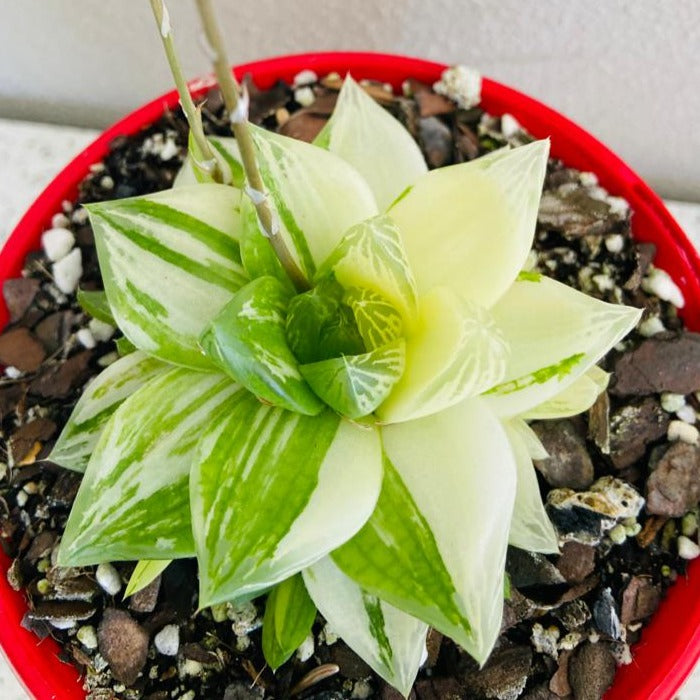
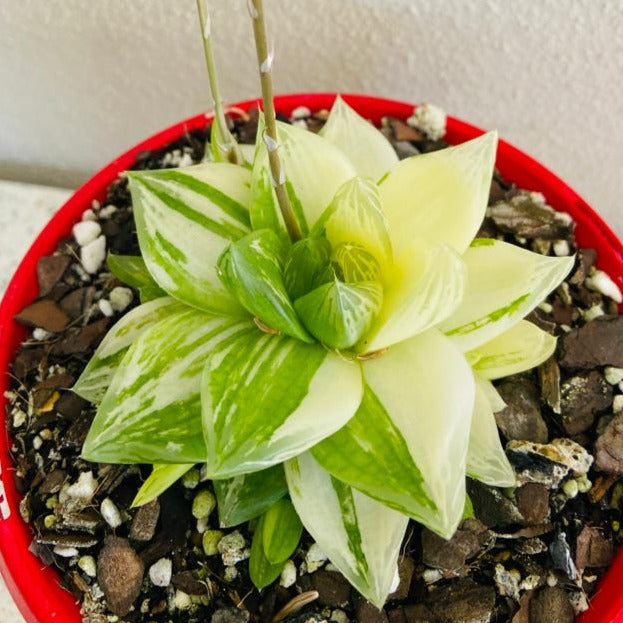
Bring a soft touch of colour and texture to your succulent collection with Haworthia ‘Variegated’ Cymbiformis. This attractive Haworthia is known for its plump, translucent green leaves marked with creamy-white variegation. The leaves form compact rosettes and can gradually produce offsets, creating a lovely clumping display over time.
Its smaller size and tolerance of filtered light make it especially useful for indoor plant displays, shaded patios, windowsills, dish gardens and succulent arrangements. It is also a good choice for Australian growers looking for a succulent that does not need strong afternoon sun.
What Makes Haworthia ‘Variegated’ Cymbiformis Special?
- Creamy Variegated Leaves: Pale green leaves are marked with attractive cream and white patterns.
- Translucent Foliage: The leaves have a slightly translucent appearance that looks particularly attractive in soft natural light.
- Compact Growth: Forms neat rosettes that remain suitable for pots and smaller spaces.
- Clumping Habit: Mature plants can produce offsets around the main rosette.
- Shade Friendly: Handles filtered light and partial shade better than many sun-loving succulents.
- Easy to Grow: A simple-care choice for beginners as well as Haworthia collectors.
Growing Haworthia ‘Variegated’ Cymbiformis in Australia
This Haworthia is well suited to bright filtered light or gentle morning sun. In hotter parts of Australia, protect it from strong afternoon sunlight, particularly during summer. Too much intense sun can cause stress or scorching.
Use a free-draining cactus or succulent mix and always choose a pot with drainage holes. Haworthias prefer their roots to dry between waterings, so avoid keeping the soil constantly wet.
Care Guide
Light: Bright indirect light, filtered sunlight or gentle morning sun. Some shade is useful in hot conditions.
Water: Water thoroughly once the soil has dried out. Allow excess water to drain away before watering again.
Soil: Use a gritty, well-draining succulent or cactus mix.
Temperature: Protect from frost and prolonged cold. Provide extra protection during very hot weather as well.
Feeding: A light succulent fertiliser during the active growing season is usually enough.
Growth: Slow to moderate, with offsets developing around the main plant as it matures.
Where to Grow It
Haworthia ‘Variegated’ Cymbiformis works well in:
- Indoor plant displays
- Windowsills with filtered light
- Shaded patios and balconies
- Succulent arrangements
- Dish gardens
- Small decorative pots
- Rockeries with some protection from harsh sun
Common & Alternative Names
This plant may be listed or sold under names such as:
- Haworthia cymbiformis variegated
- Variegated Haworthia cymbiformis
- Variegated Cymbiformis Haworthia
- Haworthia ‘Variegated’
Naming can vary between growers and nurseries, particularly for variegated forms.
What You Will Receive
The first two photos are for display purposes only. The succulent plant is supplied in a 130mm diameter red pot. The plant you receive may vary slightly in size, shape and variegation because every plant develops differently.
The plant will be shipped bare rooted.
Frequently Asked Questions
1. Can Haworthia ‘Variegated’ Cymbiformis grow without direct sunlight?
Yes. It does well in bright filtered light and can handle partial shade. A bright position is still important for maintaining healthy growth and attractive variegation.
2. Can the white variegation change over time?
Yes. The amount and intensity of variegation can vary between individual leaves and as the plant grows. Light conditions can also affect how the colours appear.
3. Is this Haworthia suitable for a bathroom?
It can be grown indoors in a bright bathroom, but good airflow is important. A constantly damp or poorly ventilated space is not ideal because Haworthias dislike prolonged wet conditions.
4. Does Haworthia ‘Variegated’ Cymbiformis produce offsets?
Yes. It can produce small offsets around the main rosette as it matures. These can eventually form an attractive cluster.
5. Why are the leaves becoming pale or losing their variegated appearance?
Changes in light, temperature and growing conditions can affect the appearance of the foliage. Keep the plant in bright filtered light and avoid sudden exposure to strong afternoon sun.
Please note — NT, TAS, WA customers: please contact us before placing your order due to additional quarantine charges associated with these locations.
View Shipping options
Share


Plant arrived in strong healthy conditions. Good size with some pups. Lovely plant.