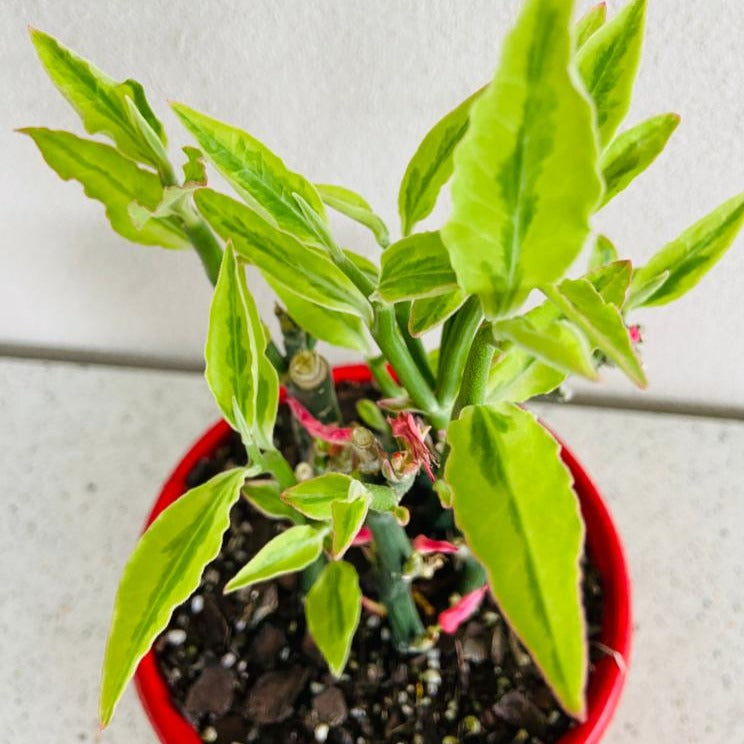
Buy Euphorbia Tithymaloides (Devil's Backbone)
Buy Euphorbia Tithymaloides (Devil's Backbone)
You must add at least of this product.
Euphorbia tithymaloides ‘Devil’s Backbone’ | Zig-Zag Succulent Plant
Give your collection something a little different with Euphorbia tithymaloides, a distinctive succulent shrub best known for its unusual zig-zagging stems. It is commonly called Devil’s Backbone, Zig-Zag Plant, and Redbird Cactus.
The upright stems carry small green leaves, creating an architectural shape that works particularly well in decorative pots. With good light, the leaf margins can develop pink or reddish tones. Mature plants may also produce small red to pink slipper-shaped flowers during warmer weather.
Its ability to handle dry conditions makes it a practical choice for warm Australian gardens, patios and bright indoor spaces.
What Makes Devil’s Backbone Special?
A Naturally Unusual Shape
The stems bend from one section to the next, creating the characteristic zig-zag form. This gives the plant plenty of visual interest even without flowers.
Green Leaves with Seasonal Colour
The fleshy green leaves provide a fresh contrast to the angular stems. Strong light and cooler conditions can bring out pink or reddish tones along the margins.
Flowers on Mature Plants
Established plants can produce small slipper-shaped flowers in shades of red or pink. Flowering is an added seasonal feature rather than the main attraction of this unusual plant.
Tough and Easy to Maintain
Once established, Euphorbia tithymaloides needs relatively little water. It is well suited to gardeners who want an interesting plant without a demanding care routine.
Care Guide
Light:
Give it bright indirect light, filtered sunlight, or gentle morning sun. In very hot parts of Australia, some protection from intense afternoon sun is useful.
Water:
Allow the potting mix to dry before watering thoroughly. Reduce watering during cooler periods.
Soil:
Use a quality cactus or succulent mix that drains freely. Avoid leaving the roots in constantly wet soil.
Temperature:
Warm conditions are preferred. Protect the plant from frost and prolonged cold.
Pruning:
Light pruning can be used to control the shape or encourage branching. Always wear gloves when pruning because Euphorbia produces an irritating milky sap.
Where to Grow It
Euphorbia tithymaloides works well in:
- Decorative outdoor pots
- Patios and balconies
- Bright indoor positions
- Succulent collections
- Rockeries and water-wise gardens
- Modern garden displays
Its upright form also makes it useful when you want to add height among lower-growing succulents.
Names You May See
Botanical name: Euphorbia tithymaloides
Common names: Devil’s Backbone, Zig-Zag Plant, Redbird Cactus
Former name: Pedilanthus tithymaloides
Plant Details
- Type: Succulent shrub
- Growth: Upright, branching and zig-zagging
- Foliage: Green, sometimes with pink or reddish margins
- Flowers: Red to pink slipper-shaped flowers
- Light: Bright light to partial sun
- Water: Allow soil to dry between watering
- Soil: Fast-draining succulent mix
- Climate: Warm conditions, protected from frost
- Pot: 130mm nursery pot
5 Less-Common Questions
Why are the stems of Devil’s Backbone zig-zagged?
The alternating growth of the stem sections naturally creates the distinctive zig-zag pattern. It is one of the main identifying features of the plant.
Can stronger light make the leaves more colourful?
Yes. Good light can encourage stronger pink or reddish colouring around the leaf margins. Very harsh sun, however, can cause scorching in hot conditions.
Why is Euphorbia tithymaloides sometimes called Redbird Cactus?
The name refers to its red or pink flowers and its somewhat cactus-like appearance. It is actually an Euphorbia, not a true cactus.
Can it be kept in the same pot for several years?
Yes, provided the plant has enough room and the potting mix continues to drain well. Repot when the roots become crowded or the growing medium deteriorates.
Is it suitable for a sheltered Australian patio?
Yes. A warm, bright patio can provide excellent conditions. During cold or frosty weather, move container plants to a protected position.
Plant & Packaging Information
This Euphorbia tithymaloides is supplied in a 130mm diameter nursery pot.
The product photographs are representative only. Natural differences in height, branching, stem shape, leaf colour and overall appearance are normal, as every plant develops differently.
Important: Euphorbia produces a white, milky sap that can irritate the skin and eyes. Handle the plant carefully and keep it away from children and pets.
Please note — NT, TAS, WA customers: please contact us before placing your order due to additional quarantine charges associated with these locations.
Share