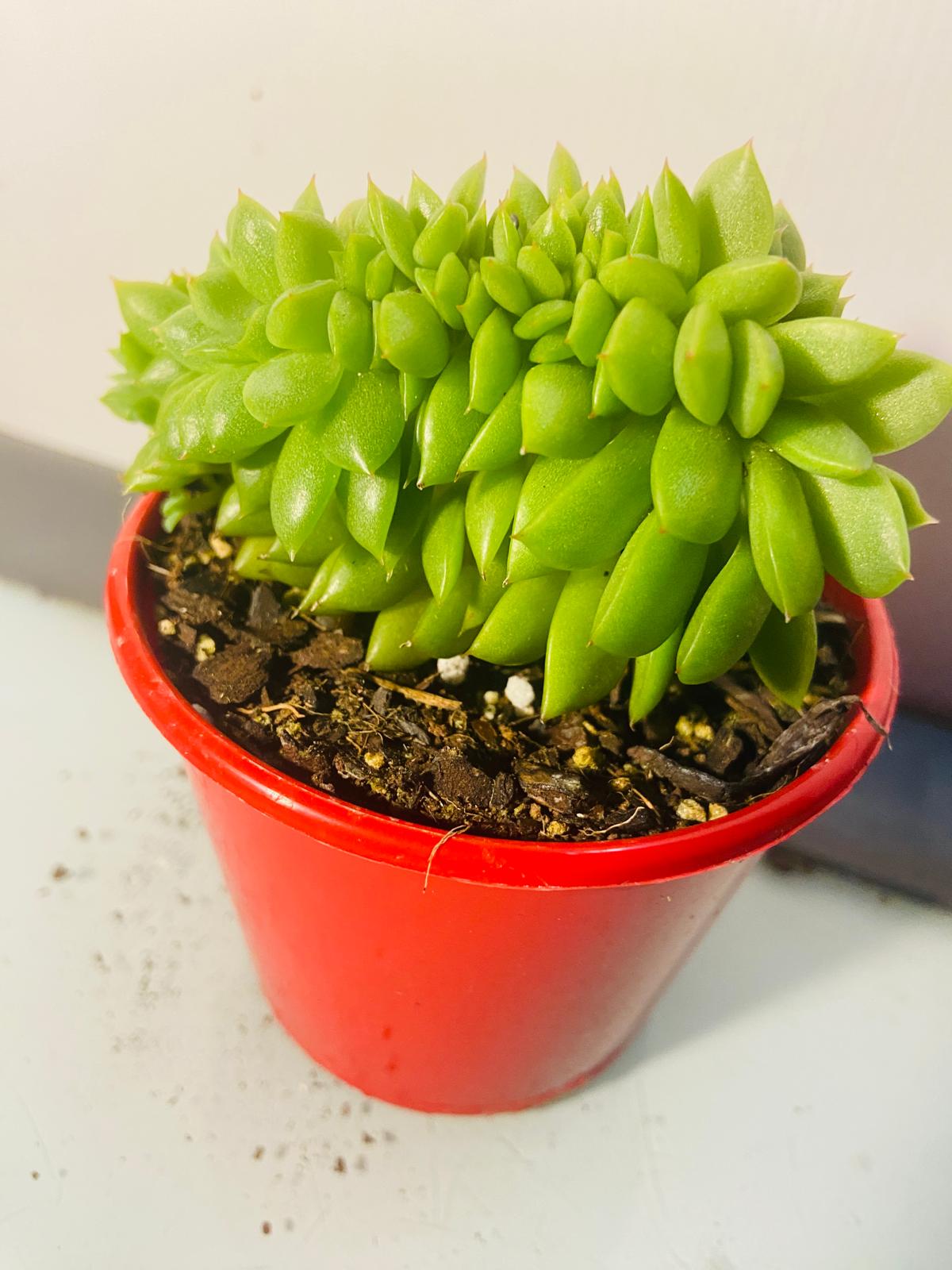
Echeveria 'Gilva' Crested #32
Echeveria 'Gilva' Crested #32
You must add at least of this product.
Echeveria ‘Gilva’ Cristata #32 – Rare Crested Succulent with Unique Fan-Shaped Growth
Echeveria ‘Gilva’ Cristata #32 is a fascinating collector’s plant with an unusual crested growth pattern. Instead of developing the usual neat, symmetrical rosette, the growing point spreads sideways and forms a broad, wavy, fan-like structure. This natural mutation gives the plant an irregular shape that makes every specimen different.
The fleshy green leaves have a slightly textured surface and may develop reddish or pink tones around the tips when the plant receives stronger light. Its compact size makes it suitable for small pots, succulent displays, windowsills, rock gardens, and collector collections.
The crested form is the main attraction. As the plant continues to grow, the fan can become wider and develop additional folds, curves, and irregular sections.
Why You’ll Love It
- Rare crested growth with a distinctive fan-shaped form
- Each plant develops its own individual shape
- Fleshy green leaves with textured surfaces
- Leaf tips may develop pink or reddish tones in brighter light
- Compact and suitable for small containers
- Excellent choice for succulent collectors
- Drought tolerant once established
- Works well in indoor and outdoor succulent displays
Botanical Details
| Detail | Information |
|---|---|
| Botanical Name | Echeveria ‘Gilva’ Cristata |
| Common Name | Crested Echeveria |
| Plant Type | Succulent |
| Growth Form | Crested, fan-shaped growth |
| Family | Crassulaceae |
| Foliage | Fleshy green leaves |
| Flowering | May produce flowers under suitable conditions |
| Pot Size | 80mm diameter |
| Water Needs | Low |
| Light Needs | Bright light to gentle direct sun |
What Makes the Crested Form Special?
Cresting occurs when the normal growing point changes from a single central point into a flattened or elongated line. Instead of producing a traditional rosette, the plant develops a fan-like structure with folds, curves, and uneven edges.
This means there is no single standard shape for a crested specimen. As it grows, the form can become wider and more sculptural, making it particularly interesting for collectors who enjoy unusual succulents and natural plant mutations.
Foliage and Colour
The leaves are thick and fleshy, helping the plant store water during dry periods. They are generally green, with the surface sometimes showing small bumps or textural details.
With suitable light, the leaf tips can develop warmer colours such as pink, red, or reddish-brown. Colour intensity can change with the season, temperature, watering, and amount of sunlight.
Avoid handling the leaves unnecessarily, as touching succulent foliage can leave marks on the natural surface.
Care Guide
Light
Provide bright light for healthy growth and good colour. Gentle morning or late-afternoon sun is suitable, while very harsh afternoon sunlight may cause leaf damage, particularly when the plant has not been acclimated.
A plant grown indoors should be placed near a bright window with good airflow.
Watering
Allow the potting mix to dry completely before watering again.
When watering, soak the soil thoroughly and allow excess water to drain away. Avoid leaving the plant sitting in water, as consistently wet conditions can lead to root problems.
Water less frequently during cool or inactive periods.
Soil
Use a free-draining cactus or succulent mix. Adding materials such as pumice, perlite, or coarse grit can improve drainage and airflow around the roots.
Good drainage is especially important for crested plants because excess moisture can remain around the irregular growth.
Temperature
It prefers warm conditions with good airflow. Protect it from frost, prolonged cold, and periods of cold, wet weather.
Fertilising
A diluted succulent fertiliser can be applied during the active growing season. Avoid heavy feeding, as slow-growing plants generally require only a small amount of additional nutrients.
Potting
Choose a pot with drainage holes. A shallow or compact container can work well while the plant is small, provided the pot is not significantly oversized for the root system.
Where to Display It
This unusual specimen works particularly well in:
- Succulent collections
- Small decorative pots
- Rock gardens
- Windowsills
- Patio displays
- Cactus and succulent arrangements
- Collector displays
- Miniature gardens
Its irregular fan shape also creates an interesting contrast when placed beside normally shaped Echeverias and other rosette-forming succulents.
Good to Know
Crested growth is a natural mutation, so the shape of this plant can change as it develops. The fan may become wider, more folded, or more irregular over time.
Colour and growth can also vary according to sunlight, temperature, watering, and the season. Each specimen has its own character, which is part of the appeal of crested succulents.
Frequently Asked Questions
What does cristata mean?
Cristata refers to a crested growth form. Instead of growing from one central growing point, the growing area spreads into a wider line, creating the characteristic fan-like appearance.
Is this a normal Echeveria rosette?
No. This specimen has a crested form, so its growth is different from the typical symmetrical rosette associated with many Echeverias.
How much sunlight does it need?
It prefers bright light and can handle some gentle direct sunlight. Strong afternoon sun should be introduced gradually to reduce the risk of sunburn.
How often should I water it?
Water only after the soil has dried completely. The exact frequency depends on temperature, light, pot size, soil, and the season.
Can I grow it indoors?
Yes. It can grow indoors in a bright position. A sunny windowsill or another location with plenty of natural light and good airflow is suitable.
Will the crested shape stay the same?
Not necessarily. Crested plants can continue developing new folds and extensions as they grow. The final shape can change considerably over time.
Is it suitable for beginners?
Yes, provided it receives enough light and is not overwatered. Its basic care is similar to many other Echeveria and succulent varieties.
Plant Size & Shipping
The succulent shown in the red pot comes in an 80mm diameter nursery container.
The image provides a representative example of the plant supplied. Because succulents naturally vary, your plant may differ slightly in size, colour, fullness, and crested shape.
Please note — NT, TAS, WA customers: please contact us before placing your order due to additional quarantine charges associated with these locations.
View Shipping options
Share