Echeveria Bluebird
Echeveria Bluebird
You must add at least of this product.
Echeveria ‘Bluebird’ – Soft Blue Rosette Succulent
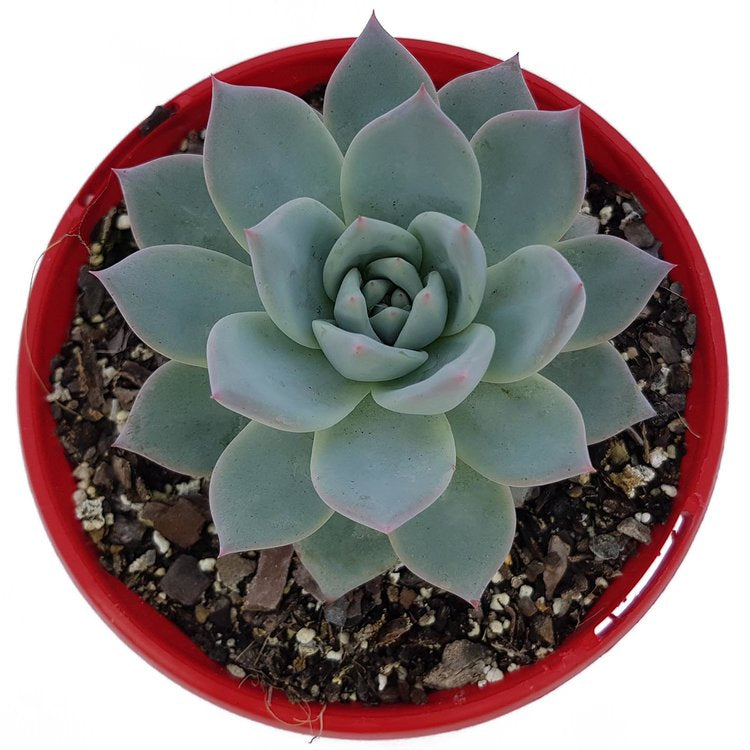
Echeveria ‘Bluebird’ is a beautiful rosette-forming succulent with soft silvery-blue foliage and a neat, symmetrical shape. The fleshy leaves have a natural powdery coating that gives the plant a soft, frosted appearance.
With plenty of light, the edges can develop gentle pink tones. Colour can vary naturally with the season, temperature, and growing conditions, so individual plants may not look exactly the same.
Its compact form makes it suitable for decorative pots, succulent arrangements, rockeries, and bright indoor spaces.
Plant Details
Botanical Name: Echeveria ‘Bluebird’
Common Name: Bluebird Echeveria
Plant Type: Rosette-forming succulent
Growth Habit: Compact and symmetrical
Foliage: Silvery blue to blue-green
Colour Accents: Pink or reddish edges under suitable conditions
Typical Rosette Size: Around 15–20 cm
Pot Size: 130mm diameter nursery pot
Water Requirement: Low once established
Climate: Warm and dry conditions preferred
Key Features
- Soft silvery-blue foliage
- Natural powdery coating on the leaves
- Pink colouring may develop along the edges
- Neat, symmetrical rosette
- May produce coral or pink bell-shaped flowers
- Drought tolerant once established
- Suitable for containers and succulent arrangements
- Good choice for collectors and beginners
Where to Grow
‘Bluebird’ works well as a feature plant in a decorative container. Its cool blue colouring also pairs nicely with green, purple, pink, and darker succulents.
It can be used in succulent bowls, rock gardens, patios, balconies, bright windowsills, and other well-lit areas.
Care Guide
Light
Give the plant plenty of bright light.
Gentle morning sun can help maintain its compact shape and bring out pink colouring along the leaf edges. If the plant has been grown in shade, introduce stronger sunlight gradually.
In very hot conditions, some protection from intense afternoon sun may be useful.
Watering
Allow the soil to dry completely before watering again.
Water thoroughly when the soil is dry, then allow excess water to drain away. Avoid allowing water to remain in the centre of the rosette.
Water less often during cooler weather or periods of slow growth.
Soil
Use a gritty, fast-draining cactus or succulent mix.
A container with drainage holes is recommended to prevent excess moisture around the roots.
Temperature
Warm conditions are preferred.
Protect the plant from frost and prolonged cold or wet weather.
Fertiliser
A diluted succulent fertiliser can be applied occasionally during active growth. Heavy feeding is not required.
The Powdery Leaf Coating
The soft coating on the leaves is known as farina. It is a natural waxy layer that gives the foliage its frosted appearance.
Try not to rub the leaves because handling can remove this coating and leave visible marks.
Flowers
Mature plants may produce tall flower stalks during the warmer months. The flowers are generally bell-shaped and can appear in pink, coral, or related warm tones.
Flowering depends on the plant's age, growing conditions, light, and season.
Good to Know
The colour of ‘Bluebird’ can change naturally. Stronger light and cooler conditions may bring out more pink around the leaf edges, while plants grown in lower light may appear more blue-green.
The exact shape, colour, and fullness of each rosette will also vary.
Frequently Asked Questions
Is Echeveria ‘Bluebird’ easy to grow?
Yes. It is a relatively easy succulent when grown in bright light with free-draining soil and careful watering.
Does ‘Bluebird’ need full sun?
It benefits from plenty of light and can handle some direct sun after acclimation. In very hot weather, protection from harsh afternoon sun can help prevent scorching.
Can it grow indoors?
Yes. Place it near a bright window where it receives plenty of natural light. A grow light can also be useful when indoor light is limited.
How often should I water it?
Water only after the soil has completely dried. The time between watering will depend on the season, temperature, light, and soil.
Why are the leaves becoming green?
Lower light can cause the plant to appear greener and may lead to less compact growth. Gradually increasing the available light can help.
What are the white marks on the leaves?
They are part of the plant's natural farina. Avoid touching the foliage unnecessarily because the coating can be removed.
Can it survive frost?
It is best protected from frost and prolonged cold conditions.
What pot should I use?
Choose a pot with drainage holes and a free-draining succulent mix. Avoid containers that stay wet for long periods.
What You Will Receive
The succulent shown in the red pot is supplied in a 130mm diameter nursery container.
The photograph is representative of the plant you may receive. Since every succulent is naturally different, there may be slight differences in size, colour, shape, rosette fullness, and growth stage.
Please note — NT, TAS, WA customers: please contact us before placing your order due to additional quarantine charges associated with these locations.
Share