Buy Echeveria Ben Badis
Buy Echeveria Ben Badis
You must add at least of this product.
Echeveria ‘Ben Badis’ – Soft Blue-Green Rosette Succulent
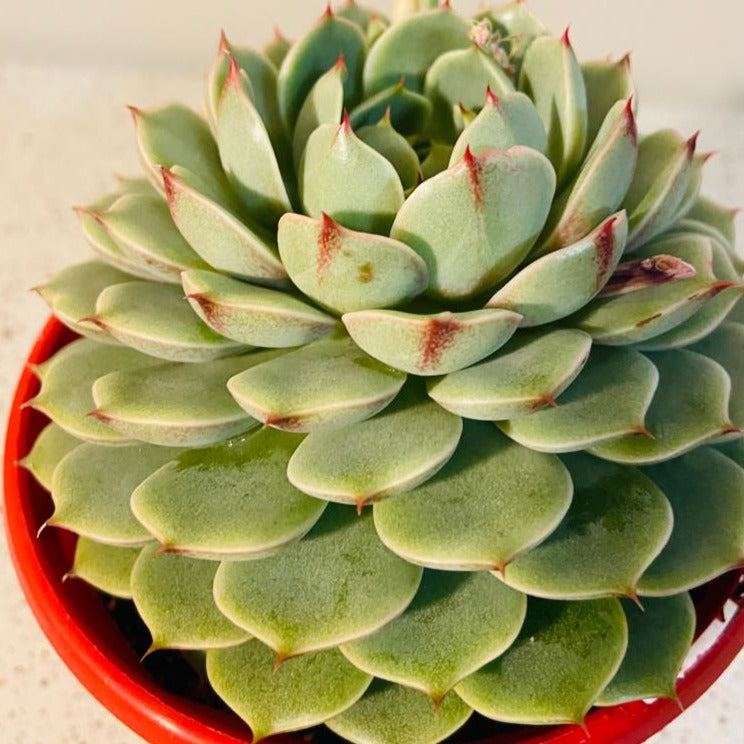
Echeveria ‘Ben Badis’ is a compact and neatly formed Echeveria known for its symmetrical rosettes, spoon-shaped leaves, and soft blue-green to silvery colouring. The leaves can develop subtle pink or lavender tones around the edges when the plant receives plenty of bright light.
Its clean shape and gentle colours make it an easy succulent to use in decorative pots, small arrangements, windowsills, patios, and collector displays. The plant grows slowly and generally maintains a tidy rosette, making it suitable for growers who prefer compact succulents that do not quickly outgrow their containers.
As the plant matures, it may produce offsets around the base and can occasionally send up a tall flower stalk during the warmer growing season.
Why You'll Love It
- Compact, symmetrical rosette-forming Echeveria
- Soft blue-green to silvery foliage
- Pink or lavender tones may develop around the leaf edges
- Spoon-shaped fleshy leaves with a soft frosted appearance
- Naturally slow growing and easy to maintain
- May produce offsets as it matures
- Can produce tall flower stalks during the warmer months
- Ideal for decorative pots and succulent bowls
- Excellent choice for windowsills, patios, and small spaces
- Works well in minimalist and pastel-toned plant displays
Plant Details
Botanical Name: Echeveria ‘Ben Badis’
Common Name: Ben Badis Echeveria
Plant Type: Rosette-forming succulent
Growth Habit: Compact and symmetrical
Foliage: Fleshy spoon-shaped leaves
Colour: Blue-green to silvery, with possible pink or lavender edges
Mature Height: Approximately 8–12cm
Rosette Width: Approximately 10–15cm
Growth Rate: Slow growing
Pot Size: 130mm nursery container
Care Guide
Light
Echeveria ‘Ben Badis’ performs best in bright light. It can grow in bright indirect light, filtered sunlight, or gentle direct sun.
More light can help maintain a compact rosette and bring out pink or lavender colouring around the leaf margins. When placing the plant in stronger direct sunlight, introduce it gradually to prevent sun damage, especially during very hot Australian weather.
Watering
Allow the soil to dry completely before watering again. When the soil is dry, water thoroughly and allow excess water to drain away.
Avoid keeping the potting mix constantly moist. Overwatering can cause root problems and may lead to soft or damaged leaves.
Try to keep water out of the centre of the rosette. Water sitting between the leaves for long periods can cause problems, particularly in cool or humid conditions.
Soil
Use a fast-draining cactus and succulent soil mix. A gritty mix containing perlite, pumice, coarse sand, or other drainage materials can help keep the roots healthy.
Always use a container with drainage holes so excess water can escape.
Temperature
This Echeveria prefers warm and relatively dry conditions. It can tolerate cooler conditions when kept dry but should be protected from frost and prolonged cold.
For colder parts of Australia, growing the plant in a container makes it easier to move it into a sheltered area when temperatures fall.
Feeding
Apply a diluted cactus or succulent fertiliser during active growth. Light feeding is generally enough because Echeverias do not require heavily fertilised soil.
Farina & Leaf Appearance
One of the attractive features of Echeveria ‘Ben Badis’ is the natural powdery coating found on its leaves. This coating, known as farina, gives the foliage a soft, silvery or frosted appearance.
The farina also helps protect the plant from sunlight and moisture loss. Avoid rubbing or repeatedly touching the leaves because the coating can be removed, leaving visible marks.
Offsets & Flowering
Mature Echeveria ‘Ben Badis’ plants may produce offsets around the base of the main rosette. These young plants can eventually be separated and grown as individual succulents once they are well established.
During the warmer growing season, mature plants may produce tall flower stalks carrying small bell-shaped Echeveria flowers. Flowering is more likely when the plant receives suitable light and good growing conditions.
Planting & Styling Ideas
The soft colours and compact shape of ‘Ben Badis’ make it especially useful for small succulent displays.
It works well in:
- Decorative succulent pots
- Succulent bowls
- Minimalist plant arrangements
- Sunny windowsills
- Indoor plant displays
- Patio containers
- Balcony gardens
- Rockeries and small rock gardens
- Collector succulent displays
- Pastel-themed plant arrangements
Its blue-green and silvery foliage also creates a soft contrast against darker green, purple, pink, or red succulents.
Good to Know
The colour of Echeveria ‘Ben Badis’ can change with light, temperature, and seasonal conditions. Plants grown in brighter conditions may develop stronger pink or lavender tones, while lower light can result in greener foliage.
The size and shape of the rosette can also vary naturally. Each plant develops at its own rate, so individual specimens may look slightly different from one another.
Pot Size & Shipping
The succulent plant housed in the red pot comes in a 130mm diameter nursery container.
The photograph is a representative example of the plant you may receive. Your plant may vary slightly in size, shape, colour, rosette fullness, and growth stage because no two succulents are exactly the same.
Please note — NT, TAS, WA customers: please contact us before placing your order due to additional quarantine charges associated with these locations.
Share