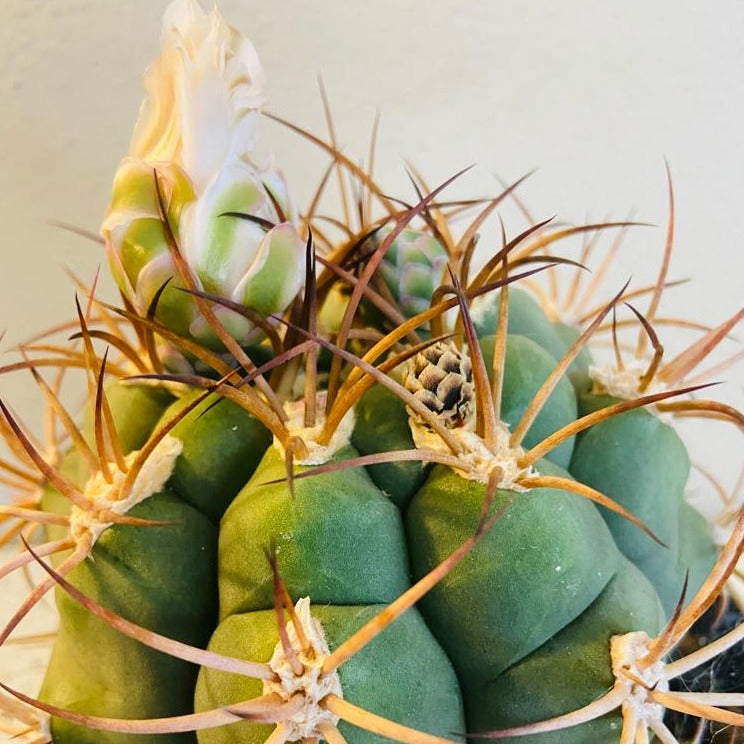
Gymnocalycium is a popular group of small, rounded cacti known for their ribbed bodies, neat growth, and surprisingly large flowers. Many species stay relatively compact, making them easy to grow in pots, cactus collections, rockeries, and sunny indoor spaces.
The name Gymnocalycium comes from Greek and refers to the genus' characteristic flower buds, which develop without the usual hairy or spiny covering found on many other cactus genera.
Depending on the species and growing conditions, the plant can have a green, grey-green, or slightly brownish body with clearly defined ribs and small spines. During the warmer growing season, mature plants can produce attractive flowers in shades of pink, white, red, or yellow.
Its small size and simple care requirements make Gymnocalycium a good choice for both new growers and experienced cactus collectors.
Common and Alternative Names
Gymnocalycium is commonly sold as:
- Chin Cactus
- Chin Cactus
- Gymnocalycium Cactus
- Chin Cactus Group
- Globe Cactus
The exact appearance can vary considerably because Gymnocalycium is a genus containing many different species and forms.
What Does Gymnocalycium Look Like?
Gymnocalycium usually develops a rounded or slightly flattened body with clearly defined ribs. Small areoles along the ribs produce short spines.
Some plants remain almost solitary, while others may slowly produce offsets around the base.
One of the most attractive features is the flower. The blooms can be quite large compared with the size of the cactus and may appear in pink, white, red, or yellow, depending on the species.
Why Grow Gymnocalycium?
Compact Growth
Most Gymnocalycium plants remain fairly small and are easy to grow in containers. They are a good option when you want a cactus without needing a large amount of space.
Attractive Flowers
With suitable light and growing conditions, Gymnocalycium can produce colourful flowers that stand out against the rounded green body.
Easy to Care For
Like many cacti, Gymnocalycium stores water in its stem and does not need frequent watering. The main point is to avoid keeping the soil wet for long periods.
Good for Collections
Its rounded shape, ribbed body, flowers, and wide range of species make Gymnocalycium a popular genus among cactus collectors.
Growing and Care Guide
Light
Give your Gymnocalycium bright light with some gentle direct sun. Morning sun is generally suitable.
In very hot conditions, protection from harsh afternoon sun can help prevent scorching, especially for young plants.
Water
Water thoroughly, then allow the soil to dry completely before watering again.
During cooler months, reduce watering significantly. Avoid watering when the plant is sitting in cold, wet soil.
Soil
Use a free-draining cactus or succulent mix. Adding extra mineral material such as pumice, perlite, or coarse grit can improve drainage.
Always use a container with drainage holes.
Temperature
Gymnocalycium prefers warm growing conditions. Protect it from frost and prolonged cold, particularly when the soil is wet.
Feeding
A light application of cactus fertiliser during the active growing season can support healthy growth and flowering. Avoid heavy feeding.
Where Can You Grow Gymnocalycium?
This compact cactus works well in:
- Cactus collections
- Succulent gardens
- Rock gardens
- Decorative pots
- Sunny windowsills
- Patio displays
- Mixed cactus arrangements
- Outdoor container gardens
Flowering
Gymnocalycium flowers are one of the main reasons collectors enjoy this genus. Under suitable conditions, flowers can appear during the warmer growing season.
The exact flower colour and size depend on the species. Pink, white, red, and yellow flowers are all found within the genus.
A plant that receives good light, suitable watering, and a cooler, drier rest during winter may be more likely to flower when active growth resumes.
Is Gymnocalycium Good for Beginners?
Yes. Gymnocalycium is generally a straightforward cactus to grow.
The most important care rule is simple: do not water too often. Give the plant plenty of light, use fast-draining soil, and allow the soil to dry before watering again.
Good to Know
Gymnocalycium is a genus rather than one single plant species, so plants sold under this name can look quite different from one another.
Some varieties remain solitary, while others can produce offsets. Flower colour, spine shape, body colour, and mature size can also vary.
The plant you receive may therefore differ naturally from the photos in size, shape, colour, and number of offsets.
Frequently Asked Questions
1. Why is my Gymnocalycium not flowering?
Lack of sufficient light, immature age, or unsuitable seasonal conditions can prevent flowering. Give the plant bright light and follow a suitable watering routine. Mature plants are more likely to flower.
2. Can Gymnocalycium survive without direct sunlight?
Yes. It can grow in bright indirect light, but very low light may lead to weak growth and reduce the chance of flowering. Gentle morning sun is often a good option.
3. Why does my Gymnocalycium look slightly flat?
Many Gymnocalycium naturally have a flattened or depressed-globular shape. However, a severely shrunken plant can also be a sign that it needs water.
4. Can Gymnocalycium grow with other succulents?
Yes. It can be included in mixed cactus and succulent displays as long as the other plants have similar light, soil, and watering requirements.
5. Does Gymnocalycium produce offsets?
Some species and forms produce offsets around the base, while others remain mostly solitary. This depends on the particular Gymnocalycium you are growing.
What You’ll Receive
The succulent plant housed in the black pot comes in a 130mm diameter container.
The image is representative of what you will receive. Natural differences in size, shape, colour, and growth habit are normal because no two plants develop exactly the same way.