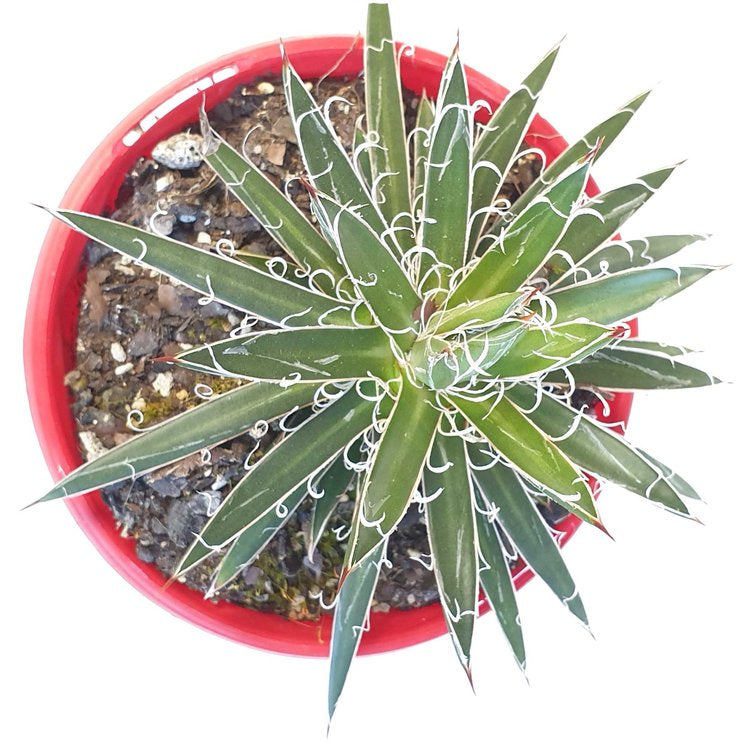
Agave parviflora - Smallflower Century Plant
Agave parviflora - Smallflower Century Plant
You must add at least of this product.
Agave parviflora, commonly called the Small Flower Agave, is a compact species valued for its detailed foliage and unusual appearance. Unlike the large agaves often used as landscape feature plants, this variety stays relatively small and develops a neat rosette of narrow, dark green leaves.
The foliage is decorated with pale white markings and fine curly fibres along the leaf margins. These natural fibres give the plant a soft, textured appearance and make it easy to recognise among other small agave varieties.
Its slow growth and manageable size make it particularly useful for containers, rockeries, dry gardens, and smaller succulent collections. It also works well alongside other architectural plants where its fine foliage can provide contrast against larger, broader-leaved agaves and succulents.
Why You'll Love It
- Compact agave suitable for smaller spaces
- Narrow dark green leaves with natural white markings
- Fine curly white fibres along the leaf edges
- Slow-growing and easy to maintain
- Excellent drought tolerance once established
- Suitable for pots, rock gardens, and xeriscape planting
- Interesting choice for agave and succulent collectors
- Adds texture without requiring a large planting area
Botanical Details
Botanical Name: Agave parviflora
Common Name: Small Flower Agave
Plant Type: Evergreen succulent
Family: Asparagaceae
Growth Habit: Compact symmetrical rosette
Foliage: Narrow dark green leaves with white markings and marginal fibres
Growth Rate: Slow
Water Needs: Low once established
Flowering: Mature plants may produce a tall flower stalk after many years
Native Range: Arizona and northern Mexico
Suitable For: Containers, rockeries, dry gardens, succulent collections, and water-wise landscapes
A Small Agave with Plenty of Detail
Agave parviflora is a good example of why agaves are not limited to large landscape specimens.
The narrow leaves create a dense rosette, while the white markings and curled fibres add fine detail that becomes more noticeable when viewed up close. The contrast between the dark green foliage and pale markings gives the plant interest throughout the year.
Because it grows slowly, it can remain suitable for a container for a considerable period when given appropriate growing conditions.
Natural White Markings and Leaf Fibres
The white markings on the leaves are one of the main features of this species. The foliage may show bands, spots, or irregular pale patterns.
Fine white fibres can also form along the margins and curl away from the leaves. These fibres give the plant a slightly delicate appearance despite its tough, drought-adapted nature.
The amount of marking and fibre development can vary between individual plants.
Care Guide
Light
Agave parviflora performs best in full sun or very bright light.
Morning sun is particularly useful for container-grown plants. In extremely hot conditions, some afternoon protection can help reduce stress and leaf scorching.
If moving a plant from a shaded environment into strong sunlight, acclimatise it gradually.
Watering
Allow the soil to dry completely between waterings.
Once established, this is a drought-tolerant plant and does not require frequent watering. During cooler weather or winter, watering can be reduced further.
The main concern is excessive moisture, especially when the soil does not drain freely.
Soil
Use a gritty, well-draining cactus or succulent mix.
A mixture containing coarse sand, pumice, perlite, or other drainage materials can help prevent water from remaining around the roots.
Temperature
This species prefers warm conditions and handles heat well.
Protect container-grown plants from prolonged heavy frost and freezing conditions. In colder areas, a sheltered position can provide useful protection.
Airflow
Good air circulation is helpful, especially in humid environments.
Avoid placing the plant in a constantly damp or poorly ventilated position.
Fertilising
Feed lightly during the active growing season with a diluted cactus or succulent fertiliser.
Slow-growing agaves generally do not need heavy feeding.
Handling
The leaves have pointed tips and a terminal spine. Take care when moving, repotting, or placing the plant in areas where people or pets regularly pass.
Where to Grow Agave parviflora
Its compact size makes it useful in many settings.
It can be planted or displayed in:
- Decorative pots
- Rock gardens
- Xeriscape gardens
- Dry garden beds
- Succulent collections
- Courtyards
- Balconies and patios
- Small feature gardens
- Mixed agave displays
It pairs particularly well with other drought-tolerant plants, including smaller agaves, aloes, echeverias, sedums, and ornamental grasses.
Growing in Containers
A container with drainage holes is essential.
Choose a free-draining growing medium and avoid leaving the pot standing in water after rainfall or watering.
Because the plant is slow-growing, it does not need frequent repotting. Move it into a larger container when the roots become crowded or the existing pot is no longer stable.
Flowering
Like other agaves, Agave parviflora flowers only after reaching maturity.
A mature plant can eventually send up a tall flowering stalk carrying small flowers. This usually happens after many years of growth.
Flowering is a natural part of the agave life cycle, and the plant may decline after flowering. Offsets or young plants can continue the collection.
What You Will Receive
The first photos are for display purposes only.
The plant supplied is grown in a 130mm diameter red nursery pot.
Each plant is naturally different, so the specimen you receive may vary slightly in size, rosette shape, leaf markings, fibre development, and overall fullness from the photographs shown.
Frequently Asked Questions
How big does Agave parviflora get?
It is a relatively small agave compared with many commonly grown landscape species. Its compact growth makes it suitable for containers and smaller gardens.
Is Agave parviflora suitable for pots?
Yes. Its slow growth and compact rosette make it particularly well suited to container growing.
Does it need full sun?
Full sun is ideal, although very hot conditions may require some afternoon protection. Gradually acclimatise plants to stronger sunlight.
How often should I water it?
Water when the soil has dried completely. Established plants can tolerate long periods without water, so avoid watering on a fixed schedule if the soil is still damp.
What are the white hairs on the leaves?
The fine white curly strands are natural leaf fibres that develop along the margins. They are one of the distinctive features of this species.
Why does my plant have different white markings from the photograph?
Natural markings can vary between individual plants. Light, age, growing conditions, and genetics can all influence the appearance of the foliage.
Is Agave parviflora frost tolerant?
It can tolerate some cold conditions, but prolonged frost or freezing temperatures can cause damage. Protect container plants during severe cold.
Is it suitable for Australian gardens?
Yes. Its drought tolerance and preference for bright conditions make it suitable for many Australian growing environments, provided drainage is good and the plant is protected from unsuitable frost conditions.
Is Agave parviflora easy to care for?
Yes. Once established, it needs relatively little water and maintenance. Good drainage and suitable light are the most important factors.
Does it flower every year?
No. Agaves generally flower only once after reaching maturity, and this can take many years. Flowering is an uncommon event for young container plants.
A Compact Choice for Agave Collectors
Agave parviflora combines the toughness expected from an agave with a much finer and more detailed appearance. Its dark green leaves, pale markings, and curly white fibres give it character without requiring a large amount of space.
For collectors, rock garden enthusiasts, and gardeners looking for a drought-tolerant container plant, it offers an unusual alternative to larger agave species.
Please note — NT, TAS, WA customers: please contact us before placing your order due to additional quarantine charges associated with these locations.
Share