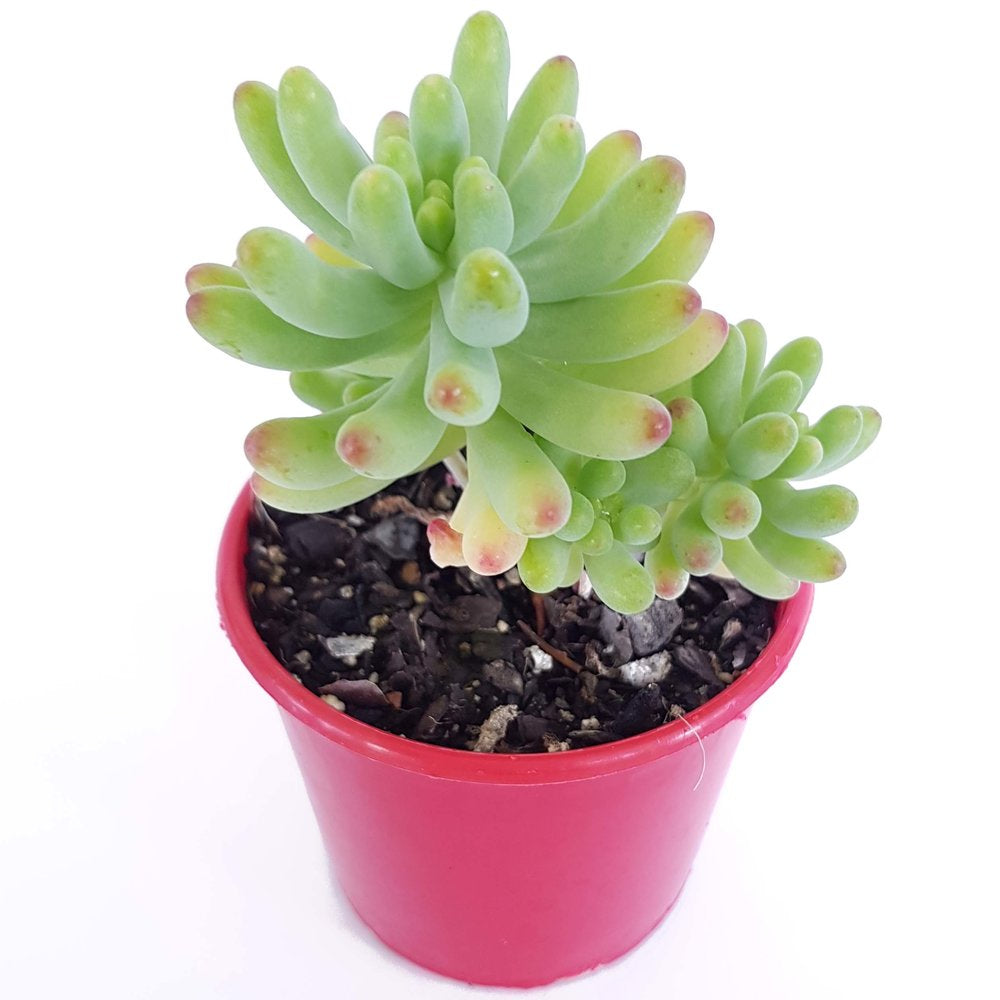
Sedum Pachyphyllum Silver Jelly Bean - Cutting
Sedum Pachyphyllum Silver Jelly Bean - Cutting
You must add at least of this product.
Sedum pachyphyllum, commonly known as Silver Jelly Bean, Gray Jelly Bean, or Grey Jelly Bean, is a popular Mexican succulent known for its plump, bean-shaped leaves and attractive silver-blue colouring.
The fleshy leaves can develop pink or red tips when the plant receives plenty of sunlight or is exposed to cooler conditions. As it grows, Sedum pachyphyllum can produce branching stems and form attractive clusters.
This easy-care succulent is a great choice for pots, rockeries, succulent arrangements and bright indoor displays. It is also a useful plant for collectors who enjoy propagating succulents from cuttings.
About Sedum Pachyphyllum
Sedum pachyphyllum belongs to the Crassulaceae family and is native to Mexico, where it grows in dry and semi-arid conditions.
Its thick leaves store water, allowing the plant to cope well with periods of dry weather. The unusual leaf shape is what gives it the popular Jelly Bean name.
With suitable growing conditions, mature plants can reach around 15–30 cm in height and develop a fuller, branching appearance.
Common and Alternative Names
You may also find this succulent sold under:
- Silver Jelly Bean
- Gray Jelly Bean
- Grey Jelly Bean
- Jelly Bean Sedum
- Silver Jelly Bean Sedum
- Sedum pachyphyllum
Key Features
Plump Silver-Blue Leaves
The thick, rounded leaves have a soft silver-blue or grey-green colour. Good sunlight can bring out pink or reddish tips, giving the plant extra colour.
Compact, Branching Growth
Sedum pachyphyllum can develop several stems and gradually form attractive clusters as it matures.
Small Yellow Flowers
Mature plants can produce small, star-shaped yellow flowers on longer stems during the warmer growing season.
Drought Tolerant
The fleshy leaves store water, making this a naturally drought-tolerant succulent once established.
Easy to Propagate
Sedum pachyphyllum can be propagated from suitable leaves, stems and offsets, making it an interesting choice for anyone who enjoys growing new plants.
Where to Grow
Silver Jelly Bean works well in:
- Succulent pots
- Rock gardens
- Container gardens
- Windowsills
- Balconies
- Patios
- Mixed succulent arrangements
- Indoor plant displays with plenty of light
Its unusual foliage also makes it useful as a contrasting plant alongside rosette-forming succulents.
Care Guide
Light
Provide bright light to full sun.
Good light helps the plant maintain compact growth and can encourage the attractive pink or red colouring on the leaf tips.
If moving a cutting or young plant into strong direct sun, introduce it gradually.
Water
Allow the growing medium to dry completely between waterings.
When watering, soak the soil thoroughly and allow excess water to drain away. Avoid keeping the cutting or plant constantly wet, as this can cause rot.
Water less often during cooler periods.
Soil
Use a free-draining cactus or succulent mix.
A gritty or sandy mix is suitable as long as excess water can drain away quickly.
Temperature
Sedum pachyphyllum prefers warm conditions and should be protected from frost and prolonged cold.
Fertiliser
A small amount of balanced succulent fertiliser can be used during active growth. Avoid heavy feeding.
Growing From a Cutting
Because this listing is supplied as a cutting, allow the cut end to dry and callus before planting.
Place the cutting into dry, well-draining succulent soil. Avoid heavy watering while it is establishing roots.
Once roots begin developing, normal soak-and-dry watering can be introduced gradually.
What You Will Receive
The first photo is for display purposes only.
The succulent is associated with an 80mm diameter container, but you will be ordering a cutting.
As with all living plants, the size, shape, colour and condition of the cutting can vary naturally. Your cutting may not look exactly like the plant shown in the photographs.
Why Choose Silver Jelly Bean?
Sedum pachyphyllum is a good choice if you want a succulent with unusual foliage and simple care requirements. Its rounded leaves give it a playful appearance, while the silver-blue colour and occasional pink or red tips provide plenty of visual interest.
It is also a good option for succulent growers who enjoy propagating plants from cuttings.
Frequently Asked Questions
1. Is Silver Jelly Bean the same as Sedum pachyphyllum?
Yes. Sedum pachyphyllum is commonly sold under names such as Silver Jelly Bean, Gray Jelly Bean and Grey Jelly Bean.
2. Can the cutting be planted straight away?
It is better to allow a fresh cutting to dry and callus at the cut end before planting. This helps reduce the risk of rot while the cutting begins to establish.
3. Should I water the cutting immediately after planting?
Avoid heavy watering immediately after planting. Keep the growing medium relatively dry while the cutting begins to develop roots, then gradually introduce normal succulent watering once it has established.
4. Why are my Jelly Bean leaves turning red?
Red or pink colouring can develop naturally when the plant receives strong light or experiences cooler conditions. The exact colour can vary between plants and growing conditions.
5. Can Silver Jelly Bean grow from a single leaf?
Yes, Sedum pachyphyllum can be propagated from healthy leaves, although results can vary. Stem cuttings are another common propagation method.
Please note - NT, TAS, WA customers: please contact us before placing your order due to additional quarantine charges associated with these locations. View Shipping options
Share