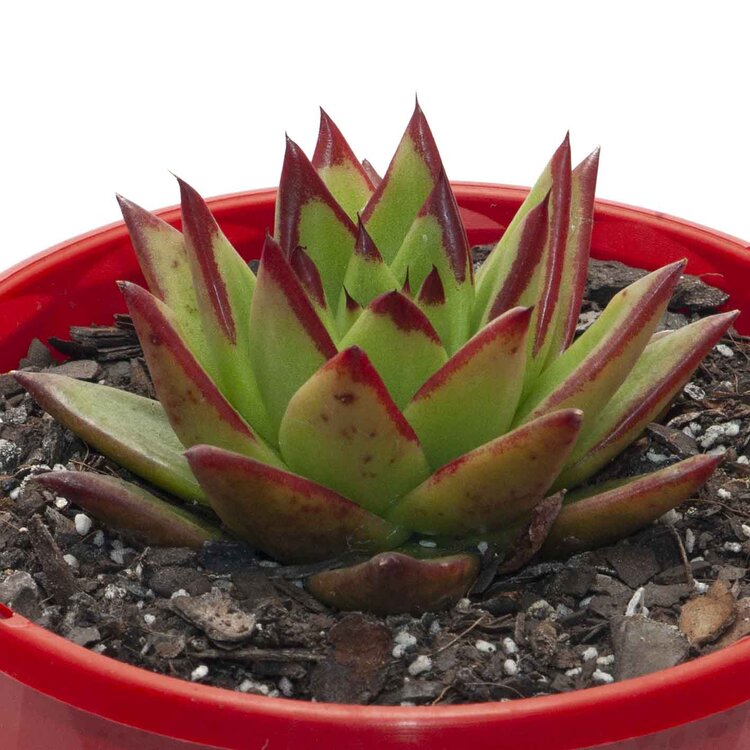
Echeveria agavoides ‘Lipstick’ – Red-Tipped Rosette Succulent
Echeveria agavoides ‘Lipstick’ is a popular succulent admired for its neat rosette shape and strong contrast between green foliage and vivid red leaf tips. The thick, pointed leaves grow closely together, creating a compact structure that gives the plant a clean and architectural appearance.
The red colouring can become more pronounced when the plant receives plenty of bright light and suitable growing conditions. During periods of lower light, the foliage may appear greener, while brighter conditions can bring out deeper red tones around the leaf margins.
Its manageable size makes it easy to grow in decorative pots, succulent bowls, rockeries, balconies, patios, and bright indoor spaces. It also combines well with softer-coloured Echeverias, Sedum, Crassula, Graptoveria, and other small succulents.
Why You’ll Love It
- Pointed green leaves with attractive red tips and margins
- Compact, symmetrical rosette growth
- Strong colour contrast for succulent displays
- Suitable for pots, rock gardens, and mixed arrangements
- Drought tolerant once established
- Relatively low maintenance
- Good choice for both new growers and collectors
Botanical Details
| Detail | Information |
|---|---|
| Botanical Name | Echeveria agavoides ‘Lipstick’ |
| Common Names | Lipstick Echeveria, Red-Tipped Echeveria |
| Plant Family | Crassulaceae |
| Plant Type | Rosette-forming succulent |
| Growth Habit | Compact and symmetrical |
| Foliage | Thick, fleshy, pointed leaves |
| Leaf Colour | Green with red to reddish margins |
| Light | Bright light to full sun |
| Water Needs | Low |
| Pot Size | 130mm diameter |
Foliage and Colour
The main attraction is the sharp contrast between the green body of each leaf and the red colouring around the tips. This gives the rosette its distinctive lipstick-like appearance.
Colour intensity can change naturally throughout the year. Stronger light and cooler conditions can encourage deeper red tones, while lower light may result in greener foliage.
Like many Echeverias, the leaves have a natural surface coating that helps protect the plant. Handle the foliage gently to avoid leaving fingerprints or marks.
Care Guide
Light
Provide bright light for healthy growth and stronger colouring. The plant can tolerate full sun once it has been properly acclimated.
If moving it from a shaded position into direct sunlight, increase exposure gradually to reduce the chance of sunburn.
Watering
Allow the soil to dry completely before watering.
When watering, soak the soil thoroughly and let excess water drain away. Avoid frequent small amounts of water and do not leave the pot sitting in water.
Water less often during cooler months or when the plant is not actively growing.
Soil
Use a free-draining cactus or succulent mix. A gritty soil containing pumice, perlite, or coarse material can help improve drainage.
Good drainage is important because constantly wet soil can lead to root problems.
Temperature
Warm, dry conditions are ideal. Protect the plant from frost, prolonged cold, and extended periods of wet weather.
Fertilising
Feed lightly during the active growing season with a diluted fertiliser suitable for cacti and succulents. Avoid heavy feeding.
Perfect For
Echeveria ‘Lipstick’ is suitable for a range of displays, including:
- Decorative succulent pots
- Rock gardens
- Patio containers
- Balcony gardens
- Sunny windowsills
- Succulent bowls
- Modern plant displays
- Mixed succulent arrangements
- Collector collections
Its red-edged foliage works particularly well alongside silver, blue-green, purple, and pale green succulents.
Good to Know
The colour of the red margins can vary according to sunlight, temperature, watering, season, and general growing conditions. This means the plant may look slightly different at different times of the year.
A compact rosette is usually a sign that the plant is receiving enough light. If the leaves begin spreading apart and the stem becomes elongated, it may need a brighter position.
Frequently Asked Questions
Why are the tips of my Echeveria ‘Lipstick’ green?
Red colouring is affected by growing conditions. Lower light can make the leaves appear greener. Gradually providing more bright light can help bring out the natural red tones.
How much sunlight does it need?
It prefers bright light and can tolerate full sun after acclimation. In very hot weather, protection from intense afternoon sunlight may be beneficial.
How often should I water it?
Water when the soil has completely dried. Avoid following a strict weekly schedule because watering needs change with temperature, light, soil, and season.
Can I grow it indoors?
Yes. Place it in the brightest area available, ideally close to a sunny window. Good natural light is important for maintaining compact growth and colour.
Is Echeveria ‘Lipstick’ easy to grow?
Yes. It is a relatively easy-care succulent as long as it receives enough light, has good drainage, and is not overwatered.
Can it grow outdoors?
Yes. It can grow well outdoors in warm conditions with good drainage. Protect it from frost and prolonged wet weather.
Does it flower?
Mature plants can produce flower stalks above the rosette when growing conditions are suitable. The flowers provide additional seasonal interest.
Plant Size & Shipping
The first two photos are for display purposes only.
The succulent shown in the red pot comes in a 130mm diameter nursery container. The image provides a representative example of the plant supplied. As every succulent is naturally different, your plant may vary slightly in size, shape, colour, rosette fullness, and growth stage.
Please note — NT, TAS, WA customers: please contact us before placing your order due to additional quarantine charges associated with these locations.
View Shipping options